
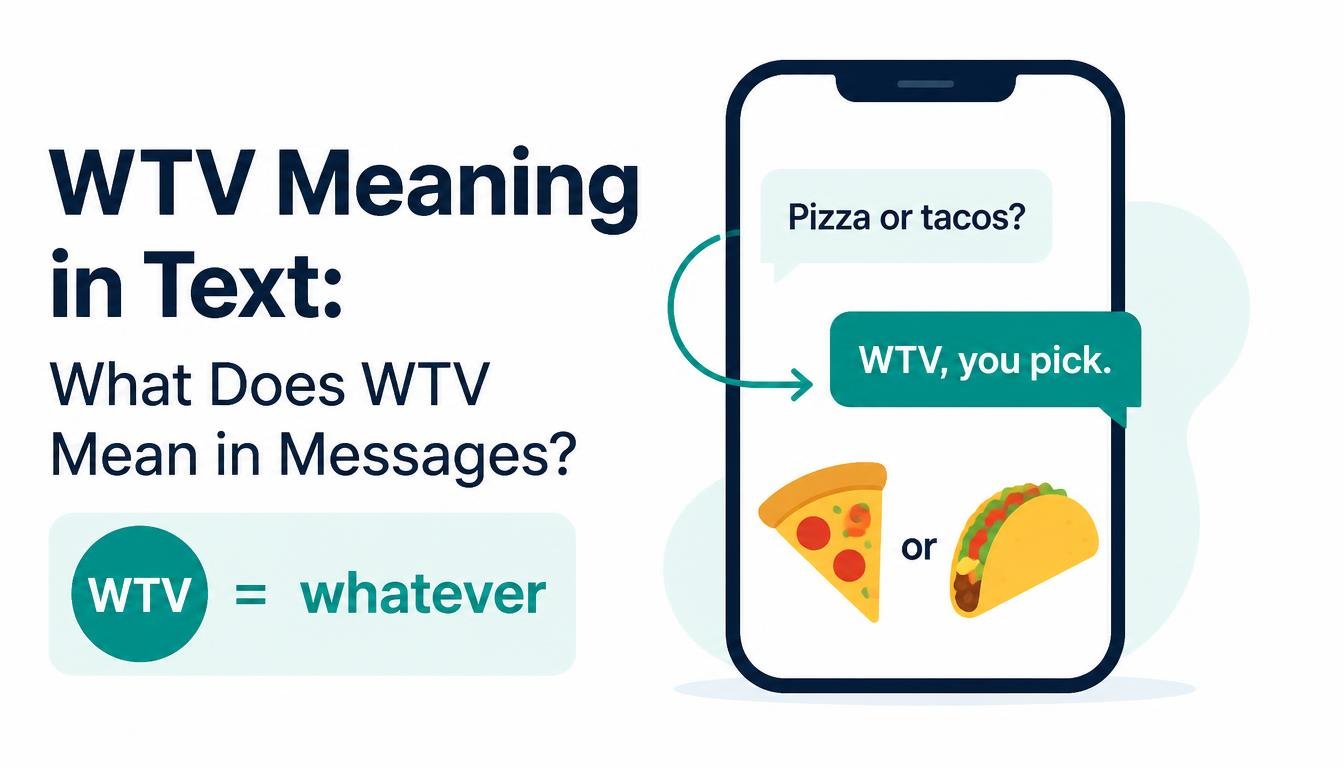

WTV usually means “whatever” in text messages and online chats. People use it when they don’t have a strong preference, want someone else to make a choice, or feel that a conversation isn’t worth continuing.
For example:
Friend: “Pizza or tacos tonight?”
You: “WTV, you pick.”
Here, WTV means that either option is fine.
But the same three letters can sound different in another conversation. If someone replies “wtv” after an argument, they may be brushing off the discussion rather than agreeing with you. If you’ve ever received a short reply and wondered whether the person was annoyed or simply relaxed, the surrounding conversation is usually a better clue than the abbreviation alone.
What Does WTV Mean in Text?
WTV is an informal abbreviation for “whatever.” It’s a shorter way to write the word in casual messages, online chats, and social media conversations.
The short form of “whatever” used in texting and chat can express indifference, boredom, or a lack of enthusiasm. In everyday conversations, it can also mean that someone is happy to let another person choose.
You’ll generally see the abbreviation written as WTV, wtv, or Wtv. The capitalization doesn’t normally change its meaning.
For example:
Friend: “What should we watch tonight?”
You: “WTV, you choose.”
In this case, you’re leaving the decision to your friend instead of naming a movie yourself.
The important thing to remember is that WTV doesn’t always mean “I don’t care about you.” It may simply mean “I don’t mind which option you choose.” The rest of the message helps clarify which interpretation makes sense.
What Does WTV Mean Depending on Context?
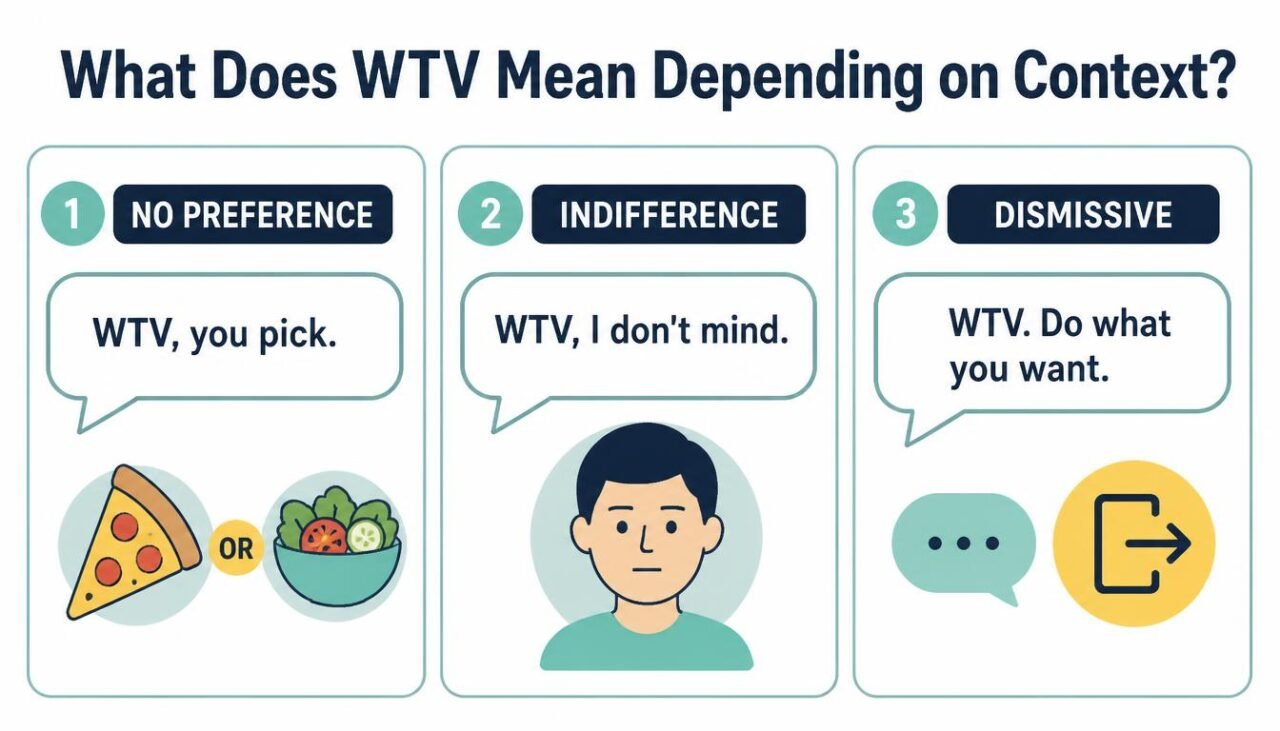
The meaning of WTV depends partly on how “whatever” is being used in the conversation. Sometimes it shows flexibility. Other times, it expresses indifference or makes a reply sound dismissive.
Here are three common ways to understand it.
When WTV Means “I Don’t Mind”
Someone may use WTV when they don’t have a particular preference and are comfortable letting another person decide.
For example:
Friend: “Should we order pizza or burgers?”
You: “WTV, you pick.”
The reply suggests that you’re happy to go with either choice. You aren’t necessarily excited about both options; you just don’t mind which one gets picked.
You might see the same kind of reply when friends are choosing a movie, planning a casual meetup, or deciding what to eat.
In these situations, WTV can be a simple, relaxed response. There’s no reason to assume that the sender is upset just because they haven’t given a specific answer.
When WTV Shows Indifference
WTV can also express indifference, meaning someone doesn’t have much interest in a topic or doesn’t feel strongly about the outcome.
For example:
Friend: “Did you like the ending of that movie?”
You: “WTV, I wasn’t really invested in it.”
Here, the person isn’t asking someone else to choose. They’re showing that the movie’s ending doesn’t matter much to them.
This is slightly different from having no preference. When choosing dinner, you might be happy with either option. When discussing a topic you aren’t interested in, you might simply have little to say about it.
WTV can communicate either idea, but the sentence around it helps you understand which one fits.
When WTV Sounds Dismissive or Annoyed
A short WTV reply can sound dismissive when someone wants to brush off a concern, stop an argument, or avoid continuing a discussion.
For example:
Person A: “You never listen to what I’m saying.”
Person B: “WTV. Believe what you want.”
In this situation, the reply may come across as irritated or dismissive because the second person appears unwilling to continue the conversation.
A standalone “wtv” after a disagreement can create a similar impression. However, it doesn’t prove that the sender is angry. They could be frustrated, tired of discussing the subject, or simply expressing themselves poorly. Other short replies, such as SW (so what), can land the same way, so the tone depends a lot on what was said before.
A useful rule is to read the whole message before deciding what a short reply means. The words around WTV and what happened immediately before it are often more informative than the abbreviation by itself.
What Does WTV Mean on Snapchat and Instagram?
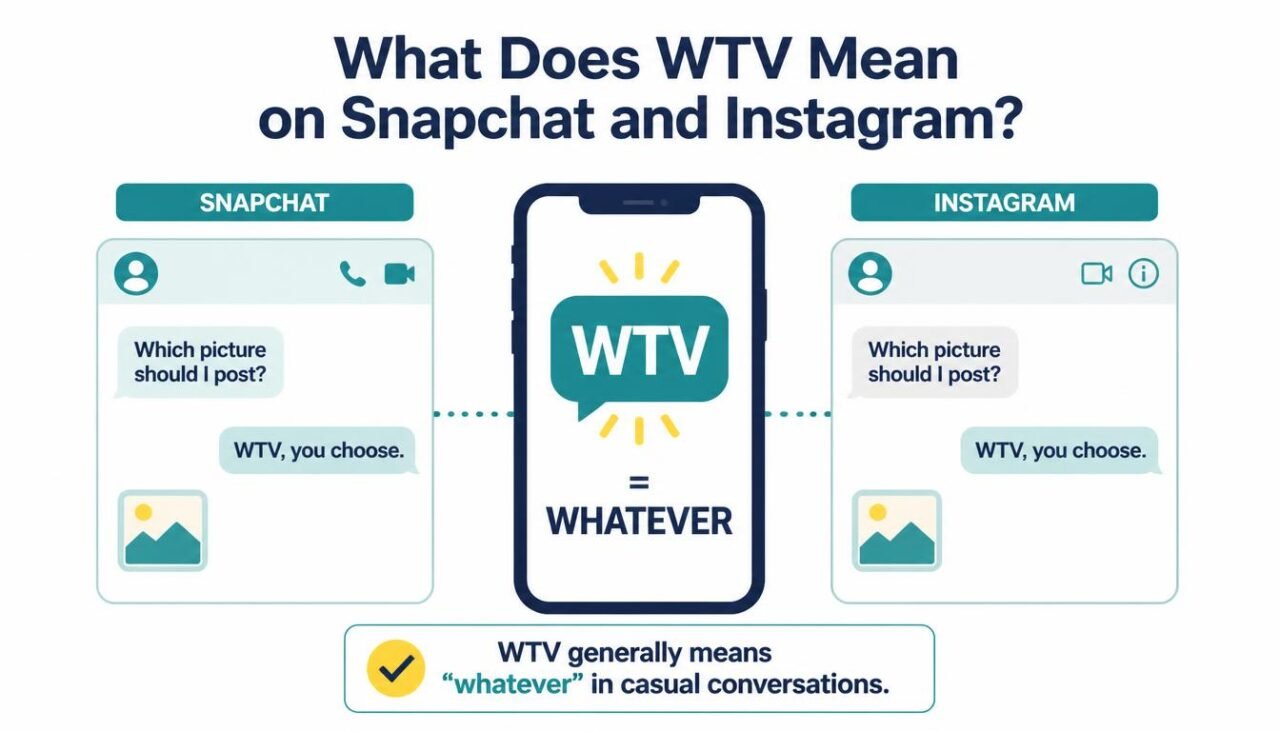
On Snapchat and Instagram, WTV generally carries the same meaning as it does in ordinary text messages: “whatever.”
You might see it in a direct message, a casual reply, or a conversation about making plans. The platform doesn’t automatically give the abbreviation a different definition.
For example:
Friend: “Which picture should I post?”
You: “WTV, choose the one you like.”
The reply leaves the decision to your friend. Depending on your usual texting style, it may sound relaxed and straightforward.
Now consider a different situation. If someone shares a concern with you and you reply only “wtv,” the message might come across as dismissive. The difference comes from the conversation, not from whether you’re using Snapchat or Instagram.
The same basic interpretation applies to other casual online chats. You don’t need to learn a separate meaning for every platform to understand WTV.
What Does WTV Mean From a Girl or Guy?
When a girl or guy texts WTV, the abbreviation usually still means “whatever.” The sender’s gender doesn’t automatically change its definition.
What matters more is the message itself and the conversation leading up to it.
For example, imagine someone texts:
“Should I come over later?”
“WTV, it’s up to you.”
This may simply mean the person is leaving the decision to you. It doesn’t necessarily suggest a lack of interest.
Now imagine someone sends “wtv” immediately after a disagreement. That reply could sound dismissive, especially if the conversation was already tense.
It’s easy to look for a hidden meaning when a message comes from someone you care about. But WTV alone isn’t reliable evidence of romantic interest, rejection, anger, or a desire to end a relationship.
If you’re unsure what the person meant, consider the complete exchange rather than trying to guess their feelings from three letters.
How to Reply to WTV and When to Use It
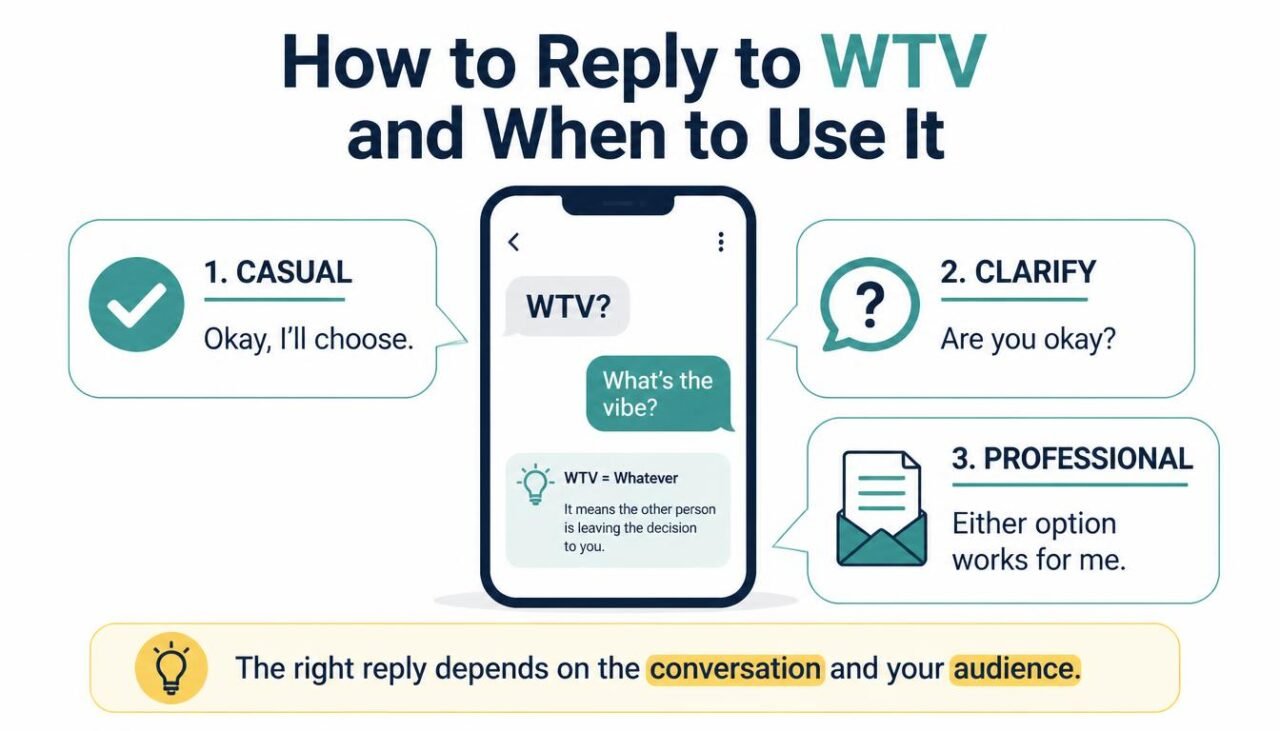
The best response depends on what the sender appears to mean. If they’re comfortable with any option, you can move the conversation forward. If the message sounds dismissive, asking for clarification may be more helpful than assuming the worst.
How to Reply to a Casual WTV Message
When someone uses WTV to show that they don’t have a preference, there’s usually no need to overthink the reply.
For example:
Friend: “Where should we eat?”
You: “WTV, you choose.”
Friend: “Okay, let’s get pizza.”
You could also reply with:
- “Cool, I’ll choose then.”
- “Let’s go with pizza.”
- “Sounds good. I’ll decide.”
These responses keep the conversation moving without making a simple decision more complicated than it needs to be.
If the other person answers with a relaxed ight, they’re most likely just agreeing to the plan.
How to Respond if WTV Sounds Dismissive
If someone sends WTV during a serious conversation, don’t automatically assume you know what they’re feeling.
You could ask:
- “Are you okay with that, or is something bothering you?”
- “You sound a little frustrated. Do you want to talk about it?”
A question like this gives the other person a chance to explain their meaning. It also helps prevent a misunderstanding from turning into a bigger argument.
Sometimes the person really is annoyed. Other times, their reply may simply be shorter or blunter than you expected. Asking calmly is more reliable than trying to interpret their mood from one abbreviation.
When to Use WTV—and When to Avoid It
WTV is best suited to informal communication, especially when you’re talking with people who understand your texting style.
It can work in casual chats with friends, informal group messages, and conversations about everyday choices.
However, it may sound careless or dismissive in a professional message, client email, or serious discussion. In those situations, a complete sentence makes your meaning clearer.
Instead of writing “WTV,” you could say:
- “Either option works for me.”
- “I don’t have a preference.”
- “You can decide.”
- “Whatever you think is best.”
These alternatives communicate flexibility without relying on slang. They are particularly useful when you aren’t sure how the other person will interpret a short reply.
WTV vs. Similar Slang
WTV appears alongside several other texting abbreviations, but their meanings aren’t identical.
| Slang | Full Form | Main Meaning |
|---|---|---|
| WTV | Whatever | No strong preference, indifference, or dismissal, depending on context |
| IDC | I don’t care | More directly expresses a lack of concern |
| IDK | I don’t know | Shows uncertainty or a lack of knowledge |
| NVM | Never mind | Often used to withdraw a request or drop a subject |
WTV and IDC can sometimes sound similar, particularly when someone is frustrated. However, IDC states a lack of care more directly, while WTV can also be a casual way to let someone else choose.
IDK is different because it means the person doesn’t know the answer. NVM often signals that the person no longer needs a response or wants to drop what they were saying.
Understanding these differences makes it easier to interpret a short message without assuming that every abbreviation communicates the same attitude.
Frequently Asked Questions
Can WTV Have Another Meaning Outside Texting?
Yes. The letters WTV can represent different things in specialized contexts, depending on the subject being discussed. However, in ordinary texting and online chats, the usual meaning is “whatever.”
If you encounter WTV in a technical document or a conversation about a specific field, check the surrounding context rather than automatically applying the texting meaning.
Is WTVR Another Way to Write Whatever?
Some online slang references list WTVR as a related shorthand for “whatever.” However, WTV is the more straightforward form to use when you want your message to be easily understood.
You shouldn’t assume that everyone will recognize WTVR or interpret it in exactly the same way. When clarity matters, writing the full word “whatever” is a safer choice.
Conclusion
WTV usually means “whatever” in text messages and online chats. It can show that you don’t mind a choice, express indifference, or sound dismissive during a disagreement.
The key is to consider the entire conversation before deciding what the sender means. If a short WTV reply leaves you unsure, asking a simple question is usually more useful than assuming you know how the other person feels.
