
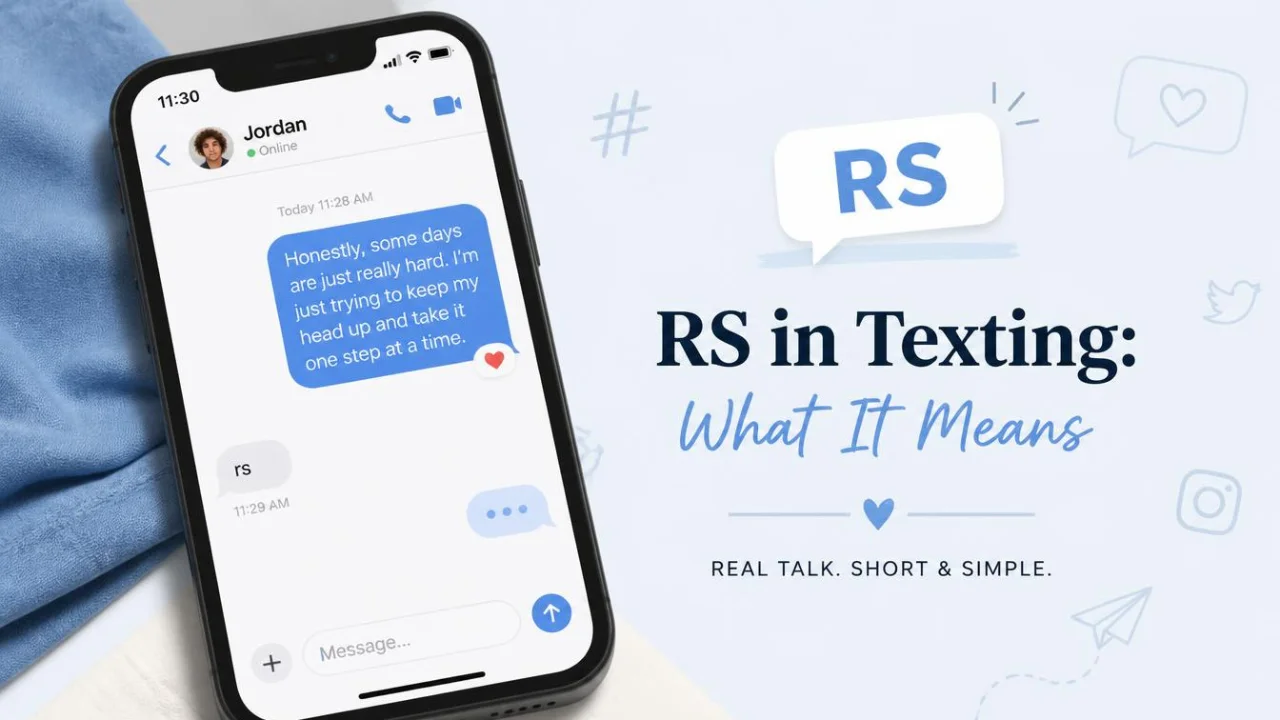

You’re in the middle of a conversation, you say something you genuinely mean, and the reply comes back: “rs.” No punctuation, no explanation, just two letters. If you’ve seen it in texts or comments, it can be confusing at first.
RS is commonly used as texting slang for “real shit,” sometimes softened to “real stuff.” People use it to show strong agreement, emphasize that they genuinely mean what they said, or respond to something they strongly relate to. In that sense, it can feel similar to saying “seriously” or “for real.”
RS also has other meanings outside of texting slang. Depending on the context, it can refer to things like relationships, video games, currencies, or other terms. This guide explains the slang meaning first, shows how RS is used in real conversations, and helps you figure out which meaning someone intends.
What Does RS Mean?
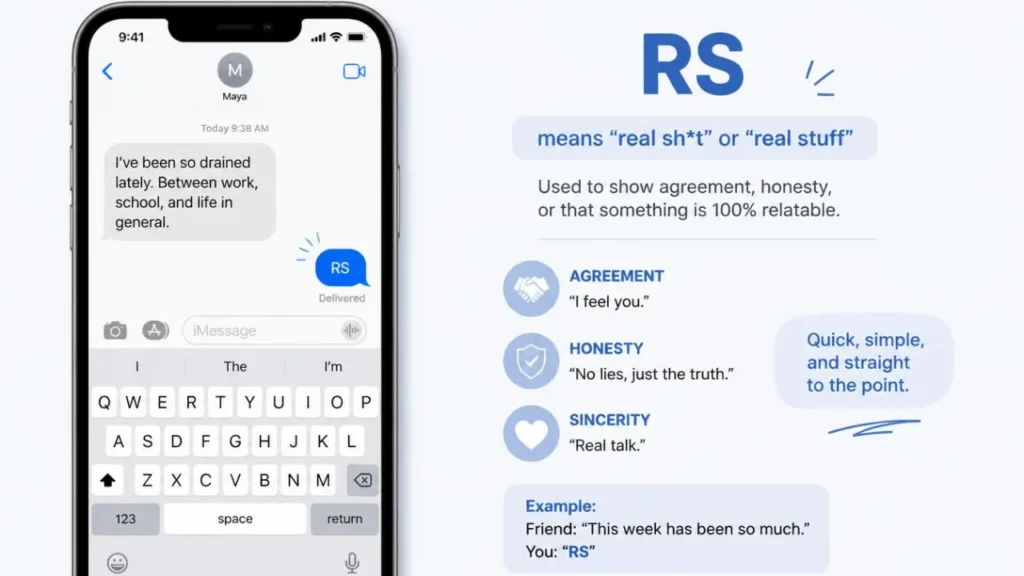
At its core, it’s short for “real sh*t” an informal way of saying something is true, serious, or deeply relatable. Some people write “real stuff” instead, which does the same job without the profanity.
There’s no single official expansion carved in stone anywhere. This isn’t the kind of acronym you’d find in a style guide it’s slang that picked up its meaning through repeated use, the same way “lol” stopped meaning anyone was actually laughing out loud. That’s also why you’ll see it written every possible way: RS, rs, Rs capitalization doesn’t change what it means, though lowercase tends to feel more casual.
Functionally, it does one of a few closely related jobs:
- Agreeing hard with something stronger than a plain “yeah” or “true”
- Signaling honesty “I’m not exaggerating, this is real”
- Reacting to something relatable the kind of comment you drop under a post that hits close to home
It’s especially common in younger, internet-native texting culture, the same space where abbreviations like IONK, FR, NGL, and no cap are used in casual conversations.
RS in a Real Chat Example
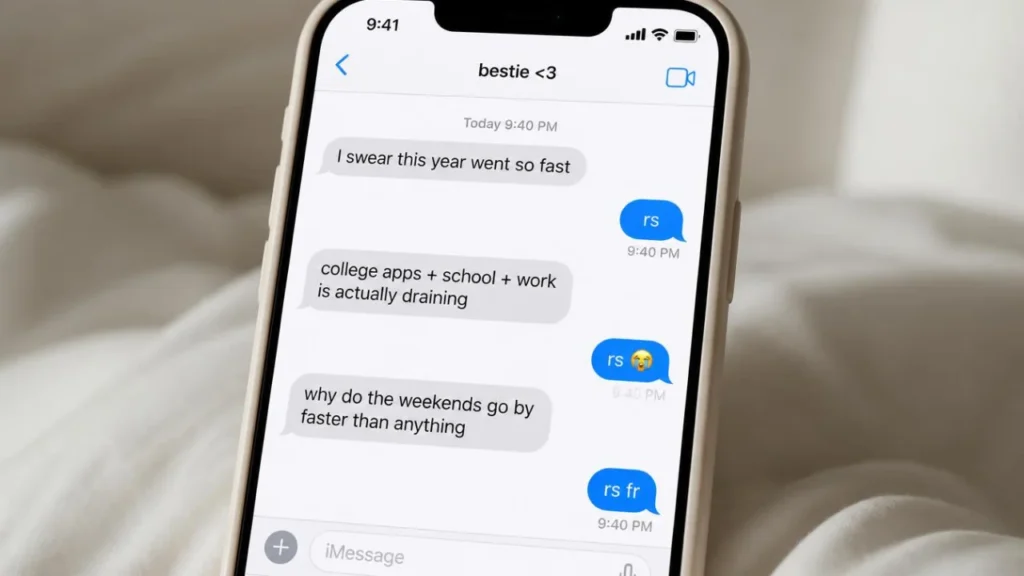
Seeing it in context makes the meaning click faster than any definition. Here’s what it tends to look like in the wild:
Plain agreement:
Them: “I swear this year has gone by so fast”
You: “rs, I don’t know where January even went”
Emphasizing honesty, usually placed at the start of a message:
“rs, I didn’t like that movie at all”
Reacting to something relatable, often under a post or video:
Comment: “rs 😭 this is literally my life”
This kind of reaction can also overlap with expressions like NMMS, depending on what the person is responding to.
Showing you understand what someone means:
Them: “I finally finished that project.”
You: “rs, that took forever.”
Stacked with another agreement word for extra emphasis:
“that’s so rs fr”
Notice it doesn’t always sit alone as a full reply sometimes it’s tacked onto the front or end of a sentence, and sometimes it’s the entire response. Both are normal. What stays consistent is the function: the person is telling you they mean it.
RS on Different Platforms
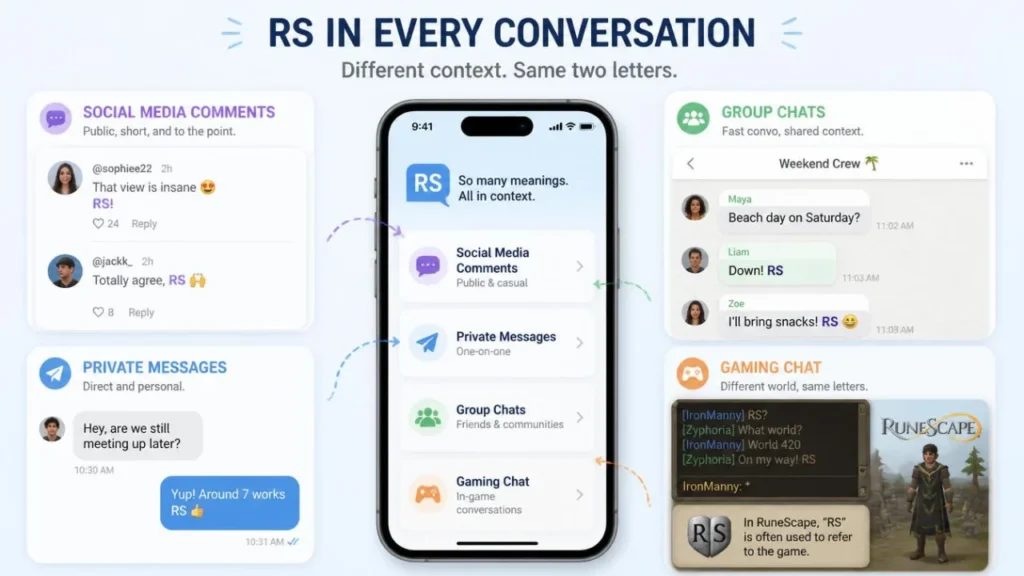
The core meaning doesn’t really change from app to app but where and how it shows up does, and one platform in particular can flip the meaning entirely.
TikTok This is where it shows up most naturally, usually in the comments under something emotional, honest, or painfully relatable. A video about a rough day at work might get a flood of “rs” replies from people who felt seen.
Instagram You’ll spot it in Reel comments, replies to Stories, and DMs basically anywhere someone wants to react to a post with a quick “this is true” instead of typing it out.
Snapchat It fits naturally into Snapchat’s fast, back-and-forth chat style, usually between friends in a casual one-on-one conversation rather than in a public comment.
WhatsApp Here it functions more like a quick nod in a personal or group chat a way to agree without breaking the flow of the conversation with a full reply.
Discord and Gaming Chats This is the exception worth knowing. In a gaming server or a conversation about games, those two letters are more likely to mean RuneScape than the slang phrase. “Do you still play RS?” in a gaming Discord almost certainly isn’t asking about your honesty it’s asking about the game. The surrounding conversation is what tells you which one you’re dealing with, not the letters themselves.
Other Things RS Can Stand For
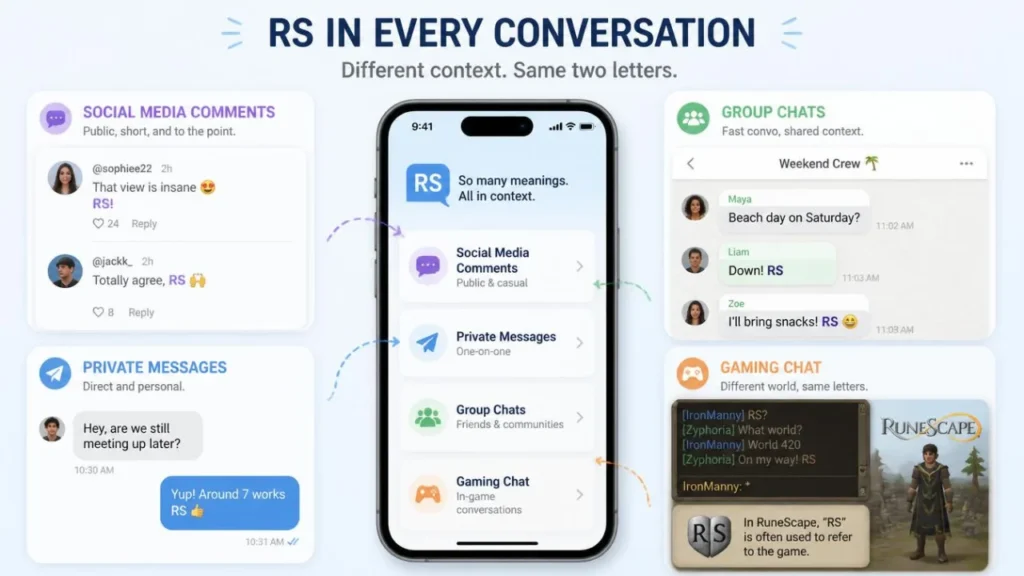
Because it’s just two letters, they get reused across contexts that have nothing to do with texting slang. A few of these come up often enough to cause genuine confusion.
Relationship In some conversations, especially among younger texters, the same letters can refer to a relationship or relationship status “how long has your RS lasted?” This meaning is much less universal than the slang usage and usually only makes sense once the topic is already romantic in nature. Outside of that context, assuming it means “relationship” will usually get you the wrong read.
RuneScape As mentioned above, gamers use it as shorthand for RuneScape, the long-running online multiplayer game. This is almost always clear from context nobody’s confused about which one you mean if the conversation is already about quests or combat levels.
Rupees In South Asian writing including in Pakistan and India “Rs” placed before a number is a currency abbreviation, as in “Rs 300.” This has nothing to do with texting slang at all; it’s a standard, long-established shorthand for rupees, and it’s really only worth mentioning here so it doesn’t get mixed up with the slang term when you see it in a price or a bill.
“Risos” in Brazilian Portuguese In Portuguese-language messages, a lowercase “rs” can be short for risos, meaning “laughs.” It functions the way “haha” or “lol” does in English a light reaction to something funny, not an expression of agreement or seriousness. If you’re reading a message from someone writing in Portuguese and see it, this is very likely what’s going on, not the English slang meaning.
The pattern across all of these: the topic of the conversation and the language it’s written in usually settle any ambiguity within a sentence or two.
How to Reply When Someone Sends You RS
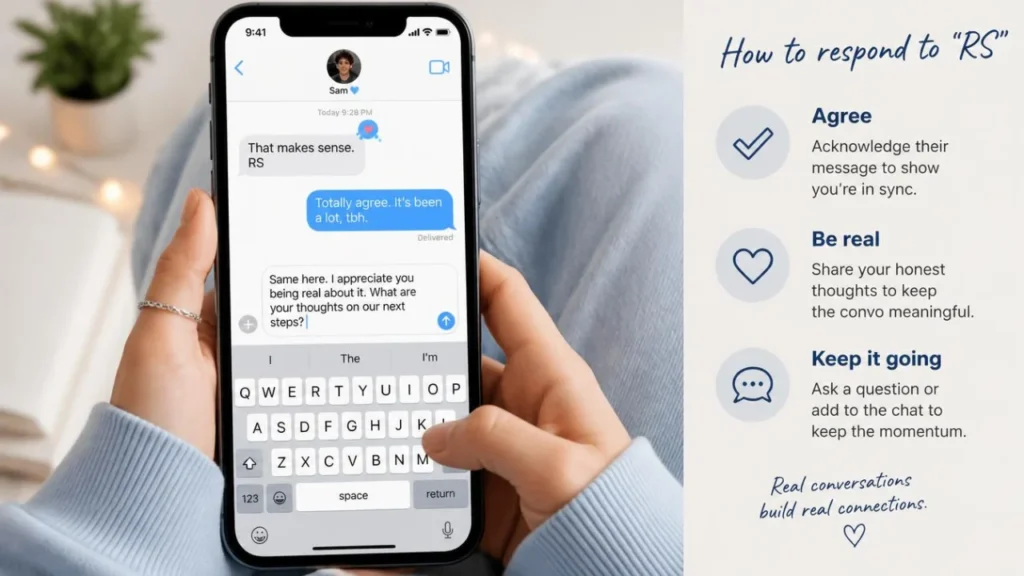
There’s no fixed script for replying the right response depends on what it was reacting to.
If someone drops it to agree with something you said, that’s usually an invitation to keep talking. They’re telling you they relate, so it’s a natural spot to add more of your thought rather than let the conversation stall.
If it follows something more personal or honest someone admitting they didn’t enjoy an event, or opening up about how they’re feeling it’s worth responding with the same level of honesty rather than brushing past it.
And if you’re genuinely unsure what someone meant especially outside a clearly gaming or romantic context it’s completely fine to just ask. Slang usage varies enough between friend groups that a quick “wait, real sh*t or something else?” isn’t awkward, it’s normal.
Words Similar to RS
It belongs to a small cluster of texting slang that all do roughly the same job: signaling agreement or honesty. But they don’t feel identical.
FR (“for real”) is the closest match and probably the most widely used of the group it agrees or emphasizes truth without carrying any built-in profanity, which makes it feel more neutral and more acceptable across a wider range of conversations.
NGL (“not gonna lie”) works a little differently it usually introduces an honest opinion rather than agreeing with one that’s already been said. “NGL, I didn’t expect that” sets up a confession; it doesn’t confirm someone else’s statement.
TBH (“to be honest”) does something similar to NGL it frames a personal viewpoint, and it tends to read as softer and more neutral.
No cap and ONG (“on God”) both lean into emphasizing truth or sincerity, similarly, though ONG’s literal reference to God can make it feel out of place in the same settings where profanity would also be avoided.
The short version: this term tends to carry more intensity than FR or TBH specifically because of what it literally stands for, even when nobody’s typing the full phrase out.
Common Mistakes and When Not to Use RS
The biggest mistake people make is treating it as if it only ever means one thing. It’s genuinely context-dependent the same two letters can be agreement, a video game, a relationship, or a currency symbol depending on where they show up, and reading it as slang by default in a gaming server or a price list will just confuse things.
It’s also worth being deliberate about where you use it. Because the full expansion includes profanity, it doesn’t translate well into professional, academic, or customer-facing communication a school email or workplace message reading “rs, this deadline isn’t realistic” comes across as careless rather than casual. In those situations, spelling it out (“Honestly, I don’t think this deadline is realistic”) does the same job without the risk.
One more thing worth clearing up: a one-word reply isn’t dismissive. It can look abrupt in text, but among people who use the term regularly, it’s just a fast way of saying “yeah, exactly” not a brush-off.
Final Words
It’s simple once you see it enough times, but it’s not a fixed acronym with one locked-in meaning it’s shorthand that shifts depending on the conversation around it. Read the topic, notice the platform, and the right meaning usually sorts itself out within a message or two.
FAQs
Is RS rude or offensive?
Not inherently, but its most common expansion includes a swear word, so it reads as informal at best and careless at worst depending on who you’re talking to. Among friends, it’s harmless; in more formal settings, it’s better avoided.
Does it mean something different from a guy vs. a girl?
No. The meaning doesn’t change based on who’s sending it it’s determined entirely by context, not gender.
Is it the same as FR?
They’re close both express agreement or sincerity but this one tends to feel more intense or blunt, largely because of the profanity in its full expansion, while FR reads as more neutral and widely acceptable.
Can it mean something completely unrelated to the slang, like RuneScape or rupees?
Yes. In gaming conversations it usually means RuneScape, and in South Asian writing “Rs” before a number refers to rupees. Neither has anything to do with the texting slang meaning.
Should I avoid using it in formal or professional messages?
Yes. It’s better to spell out what you mean (“I completely agree” or “Honestly…”) in emails, workplace chats, or academic writing, where the slang can come across as unclear or inappropriate.
Someone Texted You a Word You Don’t Understand?
MeaningInsider Gives You the Real Meaning, Real Examples, and How to Reply All in One Place.
