


Got a random text asking “HRU?” and aren’t sure what to make of it? No need to stress — it’s simpler than it looks. It means “How Are You?” It’s a quick way to check in on someone or kick off a conversation without typing the whole phrase out.
You’ll see it everywhere people text casually: group chats, Snapchat, Instagram DMs, WhatsApp. It’s not a term with hidden layers: it’s shorthand, plain and simple. The rest of this comes down to how and where people actually use it, because that’s usually where the real confusion starts.
Breaking Down the Abbreviation
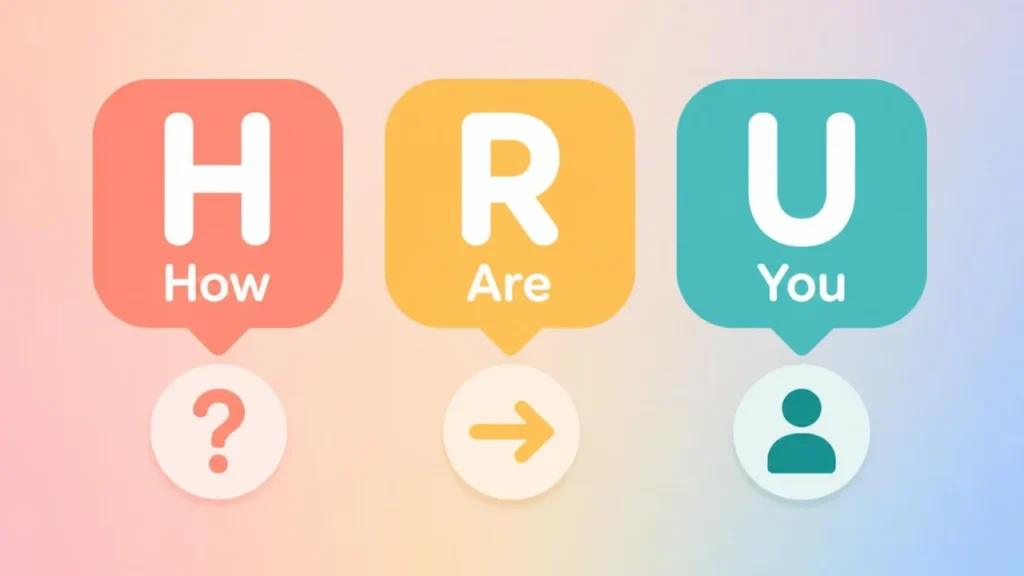
HRU is a three-letter stand-in for “How Are You?” Break it down and it’s exactly what it looks like:
- H: How
- R: Are
- U: You
People use it the same way they’d use the full question: to open a conversation, check in on someone, or just say hi without the extra typing. You’ll also see slightly longer versions like “how you doing,” which doesn’t change the meaning — it just softens the abbreviation into something that reads a bit more like normal speech.
There’s nothing formal or symbolic about it. It’s a greeting that happens to save you a few keystrokes.
Where You’ll Actually See HRU

It isn’t tied to one app. It shows up on regular texting, Snapchat, Instagram, WhatsApp, and pretty much any chat-based platform where people talk casually. The meaning doesn’t shift depending on where you see it: the abbreviation means the same thing on Snapchat as it does in a regular text message.
What changes is the context it shows up in. On dating apps, for example, it often functions less like a genuine check-in and more like a low-effort opener, the texting equivalent of a shrug and a wave. In a group chat with friends, it usually means what it says: someone wants to know how you’re doing. Same three letters, different intent depending on who’s sending it and why.
Does It Matter Who’s Asking?
People often wonder if it means something different coming from a girl, a guy, or whether it’s secretly flirty. The honest answer: the abbreviation itself doesn’t carry a different definition based on who typed it. “How are you” means “how are you,” regardless of sender.
What actually determines the tone is context: the relationship between the two people, what was said before it, and what follows after. The same greeting from someone you’ve been talking to for weeks can absolutely read as interest. The same three letters from a coworker or a classmate probably just mean exactly what they say. If you’re trying to figure out whether it’s flirty, the message itself won’t tell you; the rest of the conversation will.
HRU in a Real Text Example
Here’s roughly how it plays out in an actual conversation:
Jordan: hey hru? Sam: pretty good, just got back from work. u? Jordan: not bad, kinda tired lol
Or a shorter, more casual version:
Mia: hey, u? Alex: decent, you?
Nothing scripted about it: that’s genuinely how it gets typed out, lowercase and all, usually without a second thought.
How to Reply to This Text

Since it’s a real question dressed up in shorthand, the easiest reply is just an honest, short answer, plus turning the question back around. A few natural options:
- “I’m good, hbu?”
- “Not bad, kinda busy today”
- “Doing okay, u?”
- “Pretty tired tbh, u?”
You don’t need to write a paragraph back. The point of it is brevity, so a reply that matches that energy fits the conversation better than an overly detailed response.
HRU vs. HBU vs. WYD (Don’t Mix These Up)
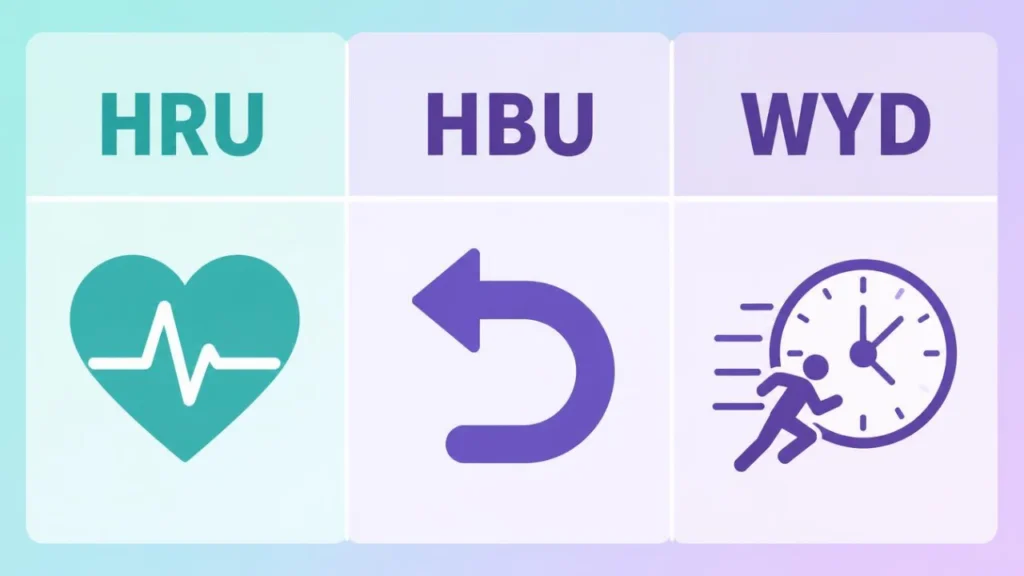
These three get confused constantly because they show up in the same kinds of conversations, but they’re not interchangeable:
| Texting Abbreviation | HRU Meaning | What It’s Asking |
|---|---|---|
| HRU | How Are You | Your current state or feelings |
| HBU | How About You | Redirects a question back to the other person |
| WYD | What You Doing | What you’re currently up to |
In practice, they often show up together in the same exchange: someone asks how you’re doing, the other person answers and replies with “good, hbu?” instead of repeating the full question. WYD is a different question entirely; it’s asking about activity, not wellbeing, even though it gets grouped with it because both are common conversation openers.
If you’ve come across WTM in a text, check out our guide to what WTM means in texting to learn what this popular abbreviation means.
Common Mistakes to Avoid
The biggest misstep is using HRU somewhere it doesn’t belong: work emails, school assignments, or any message going to someone you don’t text casually. It reads as too informal in those settings, and swapping it out for the full “How are you?” is a safer call.
There’s also a common misreading worth clearing up: it’s not “who are you.” It’s easy to mix up at a glance, but the letters break down to “how are you,” not “who.” If you’ve seen someone confused by this online, that’s the source of it.
FAQs
Is HRU formal or informal? Informal. It belongs in casual texting and social chats, not professional or academic communication.
Does HRU mean “who are you”? No. It stands for “how are you,” not “who are you,” a common mix-up given how similar the letters look.
Is it outdated? No, it’s still widely used in everyday texting and messaging.
What does it mean in hydrology? Outside of texting, it’s also used in hydrology as an abbreviation for “Hydrologic Response Unit,” a term used in watershed and environmental modeling. It has no connection to the texting meaning.
Does it mean something different in medical contexts? There’s no single standardized medical meaning for it. If you’ve encountered it in a medical setting, it’s more likely specific to that institution or document rather than a universal abbreviation.
Final Words
HRU is about as simple as texting slang gets: three letters standing in for a question people ask constantly. Once you know that, the rest is just context: who’s asking, where, and why.
If you enjoy discovering the meanings behind everyday texting slang, explore more abbreviations and internet expressions on our homepage.
